MKUltra: The Real CIA Mind Control Program That Inspired Stranger Things
When Stranger Things introduced a girl with telekinetic powers who had been raised in a government laboratory — subjected to sensory deprivation, psychological conditioning, and experiments designed to unlock abilities beyond ordinary human perception — the show’s creators Matt and Ross Duffer confirmed what many viewers already suspected: Eleven wasn’t purely fiction.
She was a composite. And the program that shaped her origin story was real.
It was called **MKUltra**. It ran for over twenty years. It was funded by the CIA. And when Congress finally forced it into the light in the mid-1970s, what emerged was one of the most disturbing chapters in the history of American government.
—
## The Context: Why the CIA Thought Mind Control Was Necessary
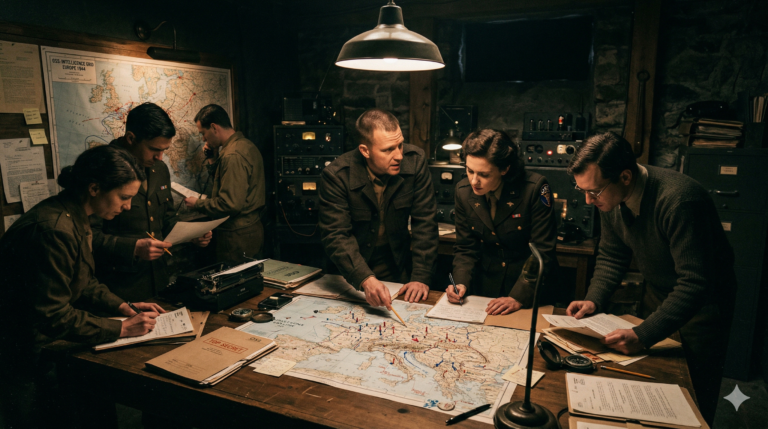
To understand why MKUltra happened, you have to understand the paranoid atmosphere of the early Cold War. By the late 1940s and early 1950s, American intelligence officials were genuinely alarmed by what they were seeing from their Soviet counterparts.
American prisoners of war returning from Korea appeared, in some cases, to have been brainwashed. Confessions that seemed impossible — soldiers denouncing their own country in terms that felt scripted and robotic — circulated widely. In 1950, a CIA memo coined the term “menticide” to describe what the Soviets appeared to be doing: the systematic destruction and reconstruction of a human mind.
The CIA’s response was not to investigate whether such techniques worked — it was to assume they did, and to start developing American equivalents before the Soviets perfected theirs. The program that resulted was formally approved in 1953 under CIA Director Allen Dulles. Its classification level was among the highest in the agency. Its charter was effectively: *find out what can be done to a human mind, using any means necessary.*
They named it MKUltra.
—
## What MKUltra Actually Did
MKUltra was not a single experiment. It was an umbrella program that funded and directed at least **150 separate research projects** across 80 institutions — universities, hospitals, prisons, and private research organizations — most of which had no idea they were working for the CIA.
The experiments clustered around several core areas.
**LSD and psychedelic drugs** were the most extensively studied. CIA researchers were fascinated by LSD’s capacity to disorient, destabilize, and render subjects temporarily incapable of maintaining a coherent sense of self. The theory was that a sufficiently disoriented subject might become malleable — susceptible to suggestion, confession, or reprogramming. Subjects were dosed with LSD without their knowledge or consent. These included mental patients, prisoners, sex workers, and — in some of the most troubling documented cases — ordinary CIA employees who were dosed by their own colleagues as part of covert field tests.
One of those employees was Frank Olson, a CIA biological weapons researcher. In 1953, Olson was given LSD without his knowledge during a CIA gathering. Nine days later, he fell from a tenth-floor window in a New York hotel room. His death was ruled a suicide. His family never accepted that verdict. In 1994, his body was exhumed and a forensic pathologist found evidence of a blow to the head before the fall. The case has never been definitively resolved.
**Sensory deprivation** was another major area of focus. Researchers wanted to know what happened to the human mind when stripped of all external input — sound, light, physical sensation. Dr. Donald Ewen Cameron, a Scottish-born psychiatrist working at McGill University in Montreal, conducted some of the most extreme experiments under MKUltra funding. Cameron subjected patients — many of whom had checked in voluntarily for depression and anxiety treatment — to prolonged sensory deprivation, drug-induced sleep lasting weeks, and a process he called **”psychic driving”**: the repeated playing of recorded messages during sleep, intended to overwrite existing thought patterns.
Cameron’s work left lasting damage on his patients. Many emerged from his care significantly worse than when they arrived. Some were never able to function independently again.
**Hypnosis, electroconvulsive therapy, and psychological conditioning** were also investigated. The overarching ambition of many MKUltra researchers was the concept of creating what was darkly termed a “Manchurian Candidate” — a person whose behavior and actions could be controlled remotely, who would carry out instructions they wouldn’t consciously remember receiving, and who would have no usable memory of being programmed.
There is no confirmed evidence that this was ever successfully achieved. There is considerable evidence that many people were seriously harmed in the attempt.
—
## The Children Who Were Subjects
Among the more disturbing elements to emerge from the partial record is evidence that some MKUltra research involved children. The documentation here is incomplete — in part because of what happened to the files.
In 1973, as the Watergate scandal was unraveling the Nixon administration and congressional scrutiny of intelligence agencies was intensifying, CIA Director Richard Helms ordered the destruction of all MKUltra files. Thousands of documents were shredded.
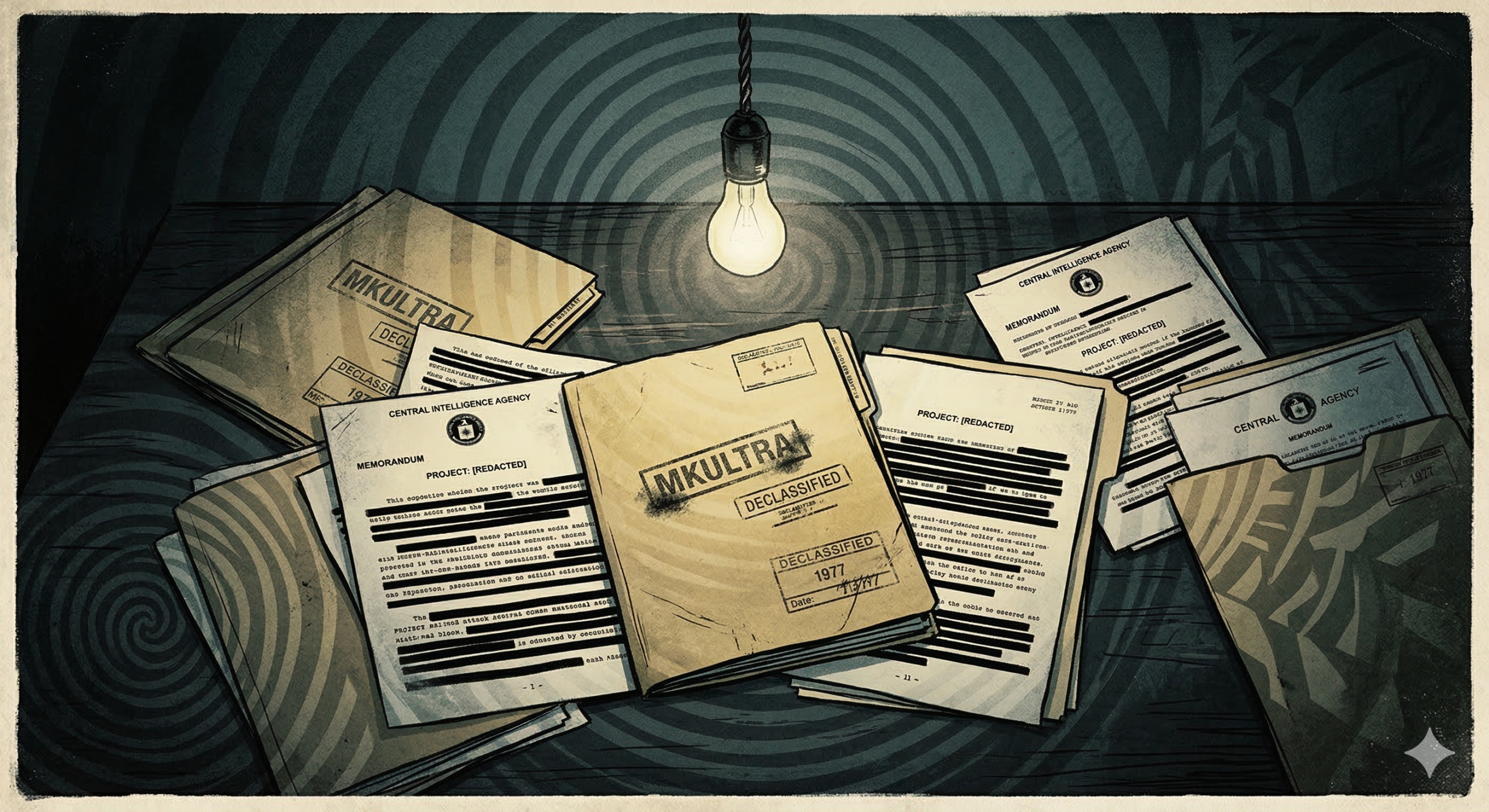
What survived did so by accident: a batch of approximately 20,000 documents had been misfiled in a financial records building that wasn’t included in the destruction order. These were discovered in 1977 during a Freedom of Information request and became the basis for the Senate Church Committee hearings that finally brought MKUltra to public attention.
The surviving documents represent a fraction of the total program. What was in the destroyed files remains unknown.
—
## The Stranger Things Connection
The Duffer Brothers have been open about the influence of real Cold War-era government programs on the show’s mythology. The Hawkins National Laboratory — the secretive government facility where Eleven was raised and subjected to experiments designed to amplify her psychic abilities — draws directly on the documented landscape of MKUltra.
The sensory deprivation tank Eleven uses to extend her remote-viewing abilities is a direct visual reference to **research conducted under MKUltra subproject 58**, which explored the effects of prolonged isolation on perception and psychological stability. The concept of a child raised inside a program, with no frame of reference for normal life, reflects the documented trajectory of Cameron’s most extreme subjects — people whose entire sense of self was dismantled and never properly reconstructed.
The Upside Down, as a metaphor, works precisely because it captures what survivors of extreme psychological experimentation have described: a world that looks identical to the familiar one but operates by completely different, terrifying rules.
—
## The Aftermath: Accountability and Its Absence
The Senate hearings of 1977 were revelatory but ultimately had limited legal consequences. The CIA’s argument — that records had been destroyed and that identifying living victims was therefore impossible — substantially limited the scope of any prosecution. Some victims of Dr. Cameron’s Montreal experiments received out-of-court settlements from the Canadian government, which had also partially funded his work. A small number of American victims received settlements from the CIA.
No one was ever criminally prosecuted.
The institutional reflex that made MKUltra possible — the belief that national security imperatives could override the rights of individuals to bodily autonomy and informed consent — was never fully dismantled. Subsequent decades would produce further controversies about government medical and psychological experiments on unwitting subjects.
What MKUltra demonstrated, above all, was the danger of programs designed to be invisible. When oversight disappears, so does constraint. The surviving documents aren’t the story of a program gone wrong. They’re the story of a program that operated exactly as designed — in total secrecy, with total impunity, for twenty years.
—
## What the Declassified Files Actually Tell Us
Reading the MKUltra documents that survived is a strange experience. Much of the language is clinical, bureaucratic, almost mundane — funding approvals, subproject status reports, assessments of research efficacy. The horror lies partly in that normalcy: in the gap between the procedural language and what that language was describing.
Subproject 68. Behavioral modification techniques. Subjects: institutional patients. Duration of treatment: [REDACTED].
The redactions remain. The gaps in the record remain. Somewhere in the destroyed files were the full details of what was done to people who never consented, never knew, and in many cases never understood why their minds had been broken.
Eleven was fiction. The program that inspired her was not.
—